Top 10 Symptoms of Arthritis in Your Knee You Should Know?
Arthritis can significantly impact your quality of life, particularly in the knee. Understanding the symptoms of arthritis in your knee is crucial for early diagnosis and treatment. Dr. Sarah Lee, a renowned rheumatologist, emphasizes, “Recognizing these symptoms early can change the course of your treatment and improve mobility.”
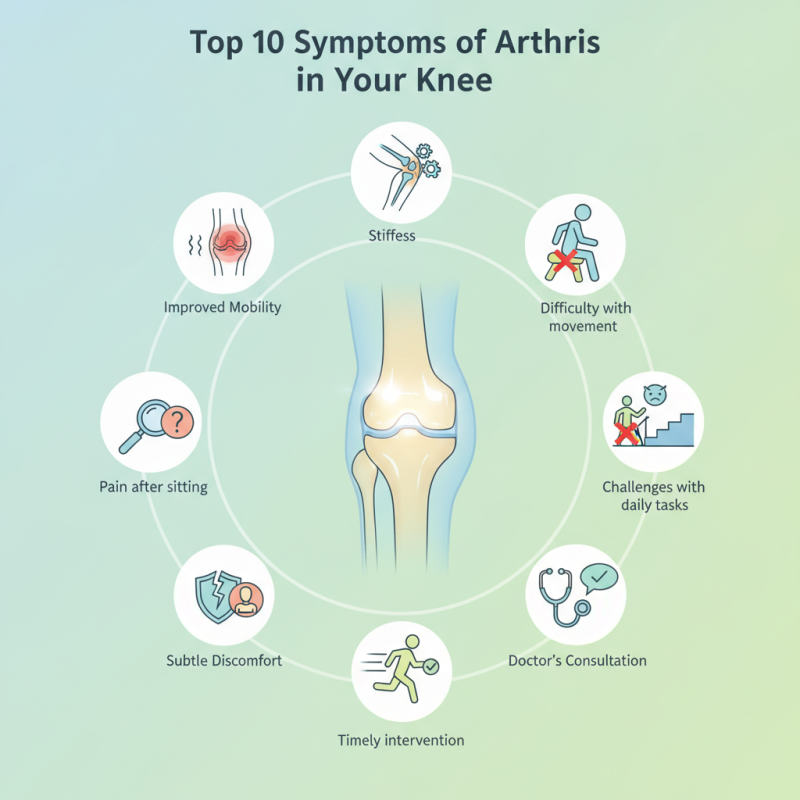
Many people often brush off subtle knee discomfort. Yet, ignoring signs may lead to long-term damage. Common symptoms include swelling, stiffness, and pain after sitting for long periods. Even simple movements can become challenging. As these issues progress, daily tasks may evoke frustration or even helplessness.
It’s essential to listen to your body. A thorough examination, combined with expert insights on the symptoms of arthritis in your knee, can empower you. While some discomfort might seem minor at first, it’s wise to act before it escalates. Awareness and timely intervention can often mean the difference between continuing your daily activities or being sidelined by pain.
Understanding Arthritis: An Overview of Knee Joint Disorders
Arthritis is a prevalent condition affecting the knee joint, leading to pain and reduced mobility. According to the CDC, an estimated 54 million adults in the U.S. suffer from arthritis. This condition can significantly impact daily activities and overall quality of life. Understanding the various types of arthritis, such as osteoarthritis and rheumatoid arthritis, is crucial in managing symptoms effectively.
Knee arthritis often manifests as swelling, stiffness, and tenderness. Age, previous injuries, and obesity are notable risk factors. Research indicates that women are disproportionately affected, particularly post-menopause. Early diagnosis can halt progression. It’s vital to consult healthcare professionals for tailored treatment plans.
Tips: Maintaining a healthy weight reduces stress on the knees. Regular low-impact exercises, like swimming, enhance joint function. Remember, rest is also essential; it helps alleviate inflammation. Listening to your body can prevent exacerbation of symptoms. While it’s tempting to push through pain, prioritizing joint health can avert long-term damage.
Common Types of Arthritis Affecting the Knee
Arthritis in the knee is a common issue that affects millions globally. Osteoarthritis and rheumatoid arthritis are the most prevalent types impacting this joint. According to the Arthritis Foundation, osteoarthritis alone affects around 32.5 million adults in the U.S. Its gradual wear and tear lead to pain and stiffness in the knee area.
Rheumatoid arthritis, a more aggressive form, impacts approximately 1.3 million Americans. It occurs when the immune system mistakenly attacks the joint lining. This condition can manifest quickly and often causes significant inflammation. Patients may experience significant swelling and warmth in the affected knee. These symptoms often lead to decreased mobility.
As data indicates, early diagnosis is crucial for effective management. Many patients wait too long to seek help, leading to further joint damage. Recognizing the symptoms early on, such as persistent pain or difficulty with daily activities, can significantly improve outcomes. Understanding these conditions enables better communication with healthcare providers.
Identifying Early Symptoms of Knee Arthritis
Knee arthritis often begins with subtle signs. Early recognition can lead to better management. Many people overlook these initial symptoms. Pain during movement is common. It may start as a dull ache. You might notice stiffness after sitting for a while. This feeling can be particularly uncomfortable in the morning.
Swelling around the knee is another key indicator. It often accompanies pain, making daily activities challenging. Some experience a clicking or grinding sensation. This sound may signal joint degeneration. Observing how these symptoms affect daily life is crucial. Ignoring them can prolong discomfort. Monitoring changes is essential for timely intervention. If symptoms persist, seeking professional advice is advisable.
Top 10 Symptoms of Arthritis in Your Knee You Should Know
| Symptom |
Description |
Severity |
Possible Causes |
| Pain |
Discomfort in the knee joint during movement. |
Mild to Severe |
Arthritis, Injury, Overuse |
| Swelling |
Inflammation around the knee joint. |
Moderate to Severe |
Joint Inflammation, Fluid Accumulation |
| Stiffness |
Reduced range of motion in the knee. |
Mild to Moderate |
Arthritis, Lack of Activity |
| Creaking or Popping Sounds |
Noisy movements of the knee joint. |
Mild |
Cartilage Wear, Joint Issues |
| Redness |
Change in skin color around the knee joint. |
Mild to Moderate |
Inflammation, Infection |
| Heat |
Increase in temperature around the knee. |
Moderate |
Inflammatory Response |
| Weakness |
Feeling of instability or loss of strength in the knee. |
Mild to Moderate |
Muscle Atrophy, Severe Pain |
| Difficulty Walking |
Challenges in gait or putting weight on the knee. |
Moderate to Severe |
Severe Pain, Joint Dysfunction |
| Fatigue |
Overall tiredness often associated with chronic pain. |
Mild to Moderate |
Chronic Pain, Inflammation |
Common Symptoms of Advanced Knee Arthritis
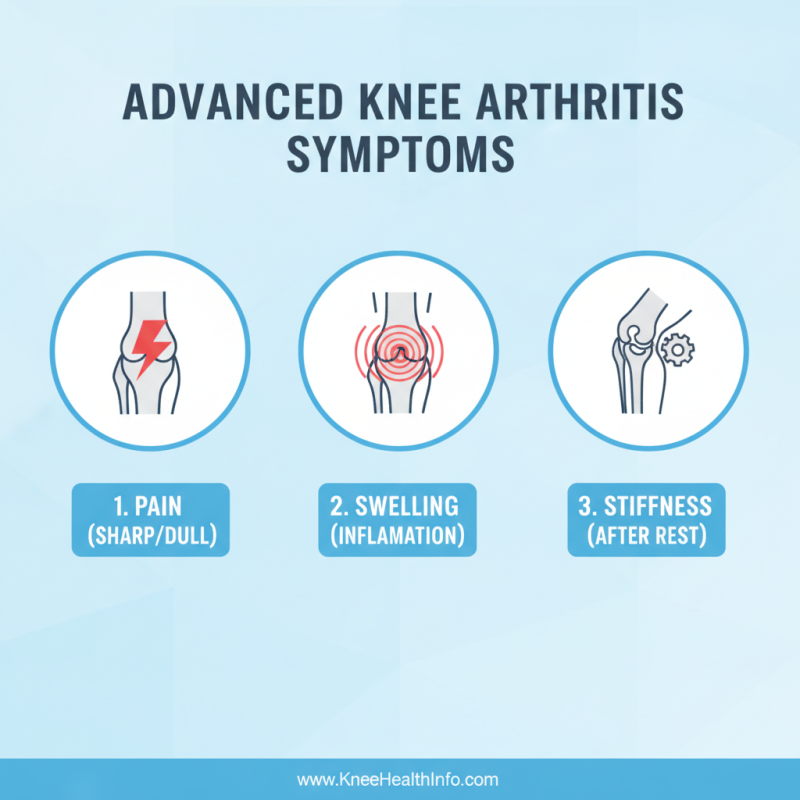
Advanced knee arthritis can lead to a range of debilitating symptoms. Pain is often the most noticeable sign. It may feel sharp or dull, and it can worsen with activity. Swelling is another common symptom. The knee might appear enlarged due to inflammation. Stiffness, especially after sitting for long periods, can be frustrating. Many people struggle to move freely after resting.
Additionally, you might hear a grinding or popping sound when moving the knee. This crepitus can be unsettling. Fatigue can also set in as the body fights inflammation. Increased reliance on other joints can lead to pain or discomfort in those areas.
Tips: Regular exercise, even gentle walking or stretching, can help maintain mobility. Ice packs can reduce swelling and alleviate pain after activity. Using assistive devices may help manage daily tasks safely. Noticing any changes early can improve overall management of arthritis. Ignoring these symptoms can lead to further complications. It's essential to consult with a healthcare provider for tailored advice.
Diagnostic Approaches for Knee Arthritis Symptoms
When facing symptoms of knee arthritis, accurate diagnosis is crucial. Physicians typically begin with a detailed patient history. They ask about symptoms, duration, and intensity of pain. Understanding daily impacts helps in evaluating the severity. A physical examination follows, focused on range of motion in the knee. Doctors may find swelling, tenderness, or crepitus during this process.
Medical imaging is often the next step. X-rays can reveal joint space narrowing and bone spurs. MRI scans provide a clearer view of soft tissues, including cartilage. Blood tests might also be conducted to rule out other conditions. Rheumatoid arthritis, for example, can mimic knee osteoarthritis. Each diagnostic tool reveals different facets of the condition.
Early diagnosis can significantly affect treatment options. However, some symptoms overlap with other ailments. Misdiagnosis may occur, leading to delayed intervention. Patients often need to actively participate in their journey. Maintaining open communication with healthcare providers is essential. It helps refine approaches and treatment plans tailored to individual needs. Understanding every step empowers patients in managing their condition.