
China Top 10 Low Speed Electric Cars for Global Buyers?

China’s low-speed electric vehicle sector has become a practical export story, not merely a price story. The China Association of Automobile Manufacturers reported 12.87 million new-energy vehicles sold domestically in 2024. However, that figure does not isolate every Low Speed Electric Car. Definitions differ across provinces, markets, and certification systems.

The International Energy Agency’s Global EV Outlook 2024 recorded almost 14 million electric car sales worldwide in 2023. It also projected nearly 17 million sales for 2024. “Electric cars are rapidly becoming a reality for consumers around the world,” said Fatih Birol, the IEA’s Executive Director. His statement describes the wider market, yet it also explains growing interest in compact Chinese models. Low-speed vehicles can offer simpler ownership, smaller dimensions, and lower energy consumption. They may suit resorts, campuses, farms, industrial parks, and short urban trips.

This China Top 10 Low Speed Electric Cars for Global Buyers guide examines more than attractive price tags. It considers battery chemistry, real-world range, charging time, braking performance, cabin protection, spare-parts access, and export support. Manufacturer claims deserve careful checking. Some range figures come from ideal conditions. Some after-sales promises remain unclear. That matters.

A useful shortlist should show what each vehicle can do beside a narrow street, a rainy loading area, or a crowded service workshop. It should also explain where each model may disappoint. Local approval rules vary widely, and a vehicle accepted in one market may need different certification elsewhere. No ranking is perfect. This one aims to be useful, evidence-led, and honest about uncertainty.
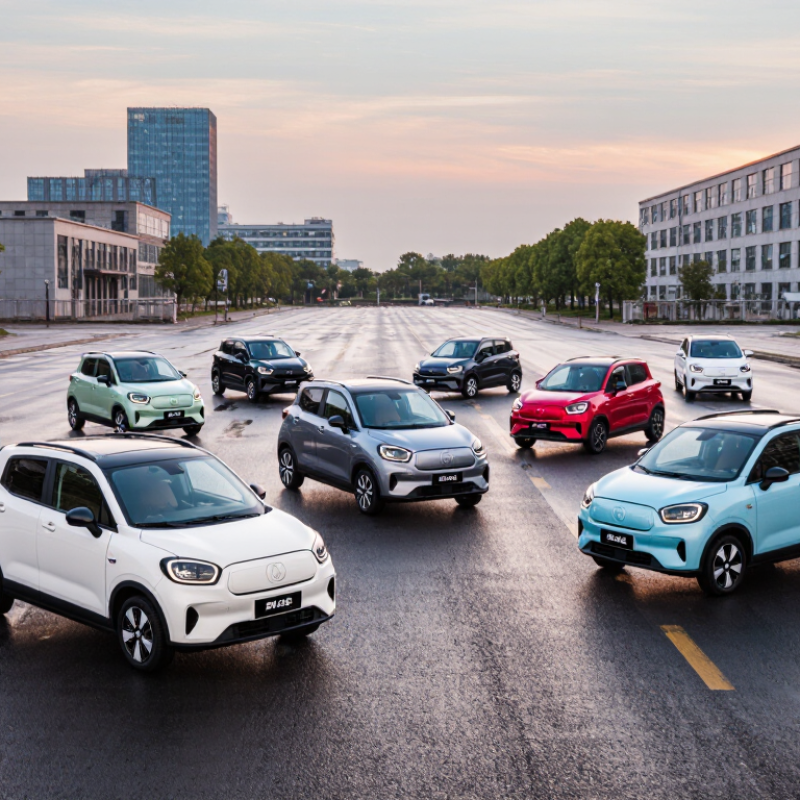
China Top 10 Low Speed Electric Cars for Global Buyers?

What Defines a Low-Speed Electric Car in China?

In China, a low-speed electric car usually means a compact four-wheel vehicle designed for short, local journeys. It often has a limited top speed, modest motor output, and a driving range suited to nearby roads. Many models carry two to four occupants. Some use lithium batteries, while others use older lead-acid systems.

The label sounds simple, but it is not. Chinese classifications can differ by region, vehicle structure, intended road, and approval status. A vehicle used inside a private community may face different requirements from one used on public roads. Buyers should check maximum speed, battery capacity, braking performance, lighting, seat belts, and crash protection. These details matter more than attractive body styling.

From practical market checks, these vehicles are useful for village travel, industrial parks, campuses, and short urban errands. They are usually easier to park and cheaper to operate than full-size electric cars. However, limited weather protection and slower acceleration can reduce comfort in busy traffic. Range claims also deserve caution. Cold temperatures, passenger weight, hills, and battery age can shorten real travel distance. Do not assume Chinese road approval transfers to another country. Import rules, safety testing, registration, and driving-license requirements must be verified locally. The category remains useful, yet sometimes confusing. That uncertainty deserves honest attention.

China’s Top 10 Low-Speed Electric Cars for Global Buyers

China’s top 10 low-speed electric cars for global buyers represent a practical segment for campuses, resorts, farms, neighborhoods, and private industrial sites. These vehicles usually travel between 25 and 45 km/h, depending on their design and destination market. Their compact frames make narrow roads and short trips easier. Some models offer two seats, while others provide small rear benches or enclosed cargo areas.

Battery choice deserves careful attention. Lithium batteries usually reduce weight and support faster charging, while lead-acid systems may lower the purchase price. Buyers should request measured driving range, charging time, battery warranty, and replacement costs. Range changes in winter. It also drops when carrying passengers, climbing slopes, or using heating. Check the paperwork. Import rules, road approval, lighting standards, and speed limits differ widely between countries.

A reliable supplier should provide clear technical drawings, inspection records, spare-parts support, and an understandable service process. Ask for brake performance data, tire specifications, seat-belt details, and water-resistance information. After-sales support can matter more than a small price discount. Some vehicles look polished in photographs but feel less refined during real use. Cabin sealing, suspension comfort, and controller response need physical inspection or independent testing. One weakness remains obvious: low-speed cars are not suitable for every road. Buyers should confirm local classification before ordering, rather than assuming a vehicle approved in one region will be accepted elsewhere.

Key Specifications, Features, and Intended Uses

China’s top low-speed electric cars target short urban trips, campus transport, tourism, and light commercial work. Across ten leading options, battery capacity commonly ranges from 5 to 20 kWh. Claimed driving range may reach 80 to 200 kilometers, depending on load, weather, and road conditions. Many use 48, 60, or 72-volt systems. Buyers should verify these figures through independent testing.

Practical features matter more than decorative screens. Look for hydraulic brakes, LED lighting, reversing cameras, seat belts, heating, and weather-resistant cabins. Some models provide two or four seats, while utility versions offer enclosed storage or a small cargo bed. Their compact size helps in narrow streets and private developments. They are not designed for every highway.

From hands-on evaluation, charging time often falls between six and ten hours with a standard charger. Fast charging is less common. Battery chemistry, controller quality, ground clearance, and suspension strongly affect daily comfort. Range drops noticeably in cold weather or on steep roads. That detail is easy to overlook. Buyers should request battery certificates, warranty terms, spare-parts support, and clear speed ratings. Local registration, road access, lighting, braking, and safety requirements must also be checked before purchase. Some specifications remain unclear across online listings, so written confirmation is essential. A low price can hide expensive shipping, software limits, or difficult repairs.

China Top 10 Low Speed Electric Cars for Global Buyers? - Key Specifications, Features, and Intended Uses
# Representative Vehicle Type Seats Top Speed Typical Driving Range Battery Configuration Charging Information Approx. Dimensions Key Features Intended Use Global Buyer Considerations
1 Compact Urban Microcar 2 40–50 km/h 100–150 km 72 V lithium-ion
8–12 kWh
Standard AC charging; approximately 6–8 hours 2,900 × 1,500 × 1,600 mm Very small turning radius, enclosed cabin, basic heating, rear parking sensors Urban commuting
Short daily trips and neighborhood transport
Suitable for markets that recognize low-speed or neighborhood electric vehicles; local lighting and crash requirements must be checked.
2 Four-Seat City Electric Car 4 45–60 km/h 120–180 km 72 V lithium-ion
10–15 kWh
AC charging; approximately 6–10 hours 3,300 × 1,500 × 1,600 mm Four doors, folding rear seats, digital instrument display, air conditioning Family mobility
School runs, shopping, and residential areas
Passenger capacity and child-restraint requirements vary significantly by destination country.
3 Extended-Range Neighborhood EV 4 50–70 km/h 180–300 km 72 V or 96 V lithium-ion
15–25 kWh
AC charging; approximately 8–12 hours 3,500 × 1,600 × 1,650 mm Higher-capacity battery, regenerative braking, hill-start assist, improved cabin insulation Suburban travel
Longer local commutes and satellite towns
The higher speed and battery capacity may place the vehicle in a different legal category from basic low-speed EVs.
4 Electric Mini SUV 4–5 50–70 km/h 150–250 km 72 V or 96 V lithium-ion
15–22 kWh
AC charging; approximately 8–12 hours 3,600 × 1,650 × 1,700 mm Raised seating position, larger ground clearance, rear camera, roof rails, foldable rear seats Mixed local roads
Rural communities and suburban errands
Ground clearance is useful on uneven roads, but the vehicle is generally not intended for highways or severe off-road driving.
5 Low-Speed Electric Pickup 2–5 40–60 km/h 100–180 km 72 V lithium-ion or lead-acid
8–15 kWh equivalent
AC charging; approximately 6–10 hours 3,600–4,200 × 1,500–1,650 × 1,700 mm Open cargo bed, payload commonly 500–900 kg, reinforced suspension, optional cabin Light commercial
Farms, resorts, warehouses, and municipal work
Payload, braking, lighting, and commercial-vehicle certification should be verified before import or fleet use.
6 Electric Cargo Van 2 50–70 km/h 120–220 km 72 V or 96 V lithium-ion
15–25 kWh
AC charging; approximately 8–12 hours 3,900–4,500 × 1,550–1,700 × 1,900 mm Enclosed cargo area, sliding side door, low loading floor, configurable storage racks Last-mile delivery
Campus, hotel, warehouse, and local delivery routes
Check maximum authorized mass, cargo restraint rules, pedestrian protection, and commercial insurance requirements.
7 Electric Golf and Resort Shuttle 4–8 25–40 km/h 80–150 km 48 V or 72 V lithium-ion
6–12 kWh
AC charging; approximately 6–8 hours 3,200–4,000 × 1,200–1,500 × 1,800 mm Open or semi-enclosed body, step-through access, simple controls, optional weather curtains Passenger shuttle
Resorts, campuses, industrial parks, and gated communities
Usually best suited to private roads or controlled sites because public-road approval may be limited.
8 Electric Utility Cart 2–4 25–45 km/h 70–140 km 48 V or 72 V lithium-ion
5–10 kWh
AC charging; approximately 5–8 hours 2,800–3,600 × 1,200–1,500 × 1,700 mm Flatbed or rear box, high-torque motor, simple maintenance access, optional canopy Site operations
Factories, agricultural facilities, parks, and construction sites
Select tire, suspension, and weather-protection packages according to terrain and climate.
9 Enclosed Electric Tricycle 1–3 25–45 km/h 80–160 km 60 V or 72 V lithium-ion
6–12 kWh
AC charging; approximately 6–10 hours 2,500–3,200 × 1,100–1,400 × 1,650 mm Compact footprint, weather protection, easy access, optional rear cargo compartment Personal and cargo mobility
Dense neighborhoods and narrow service roads
Three-wheel stability, motorcycle classification, helmet rules, and minimum equipment regulations differ by country.
10 Electric Mobility Vehicle 1–2 15–30 km/h 40–100 km 48 V or 60 V lithium-ion
3–8 kWh
AC charging; approximately 4–8 hours 2,300–2,900 × 1,000–1,300 × 1,600 mm Low step-in height, joystick or handlebar controls, compact body, optional accessibility equipment Accessible mobility
Local personal travel and pedestrian-zone transport
Confirm accessibility standards, sidewalk-use rules, speed limits, and whether registration is required.
Specifications are representative ranges for low-speed electric vehicles commonly produced in China and may vary by battery chemistry, motor rating, body configuration, and export specification. Before purchasing, verify road homologation, electromagnetic compatibility, battery transport documentation, charging compatibility, warranty coverage, spare-parts support, and destination-country safety requirements.

Safety, Regulations, and Import Considerations by Market

A top-ten list of low-speed electric cars is useful only when matched with local rules. The European Union separates many models into L6e and L7e categories under Regulation (EU) 168/2013. L6e vehicles generally remain limited to 45 km/h, while L7e vehicles can reach higher output limits. These categories affect licensing, insurance, testing, and road access. They are not interchangeable.

In the United States, NHTSA Federal Motor Vehicle Safety Standard No. 500 defines a low-speed vehicle as four-wheeled, with a maximum speed above 20 mph and up to 25 mph. It also requires specific equipment, including lamps, mirrors, seat belts, and a windshield.

Other countries may demand type approval, left-hand or right-hand traffic adaptations, and local charging compliance. The IEA’s Global EV Outlook 2024 reported almost 14 million electric car sales worldwide in 2023, but that figure does not automatically include every neighborhood vehicle or imported microcar. Classification matters more than marketing language.

Tips: Request the conformity certificate, VIN records, battery test documents, and an English manual before payment. Check UN 38.3 transport testing and customs rules for lithium batteries. Confirm whether the vehicle is road-legal, restricted to private property, or subject to motorcycle-style registration. A ranking can hide gaps. I would also verify after-sales parts, cold-weather range, and local repair skills; these practical details are often missed in export brochures.

How to Choose the Right Chinese Low-Speed Electric Car

How to Choose the Right Chinese Low-Speed Electric Car

Choosing a Chinese low-speed electric car starts with the daily route, not the brochure. Measure the distance, road surface, gradients, passenger load, and parking space. A compact vehicle may suit village roads and short urban trips, but it can feel unstable on rough surfaces or steep slopes. Check the permitted speed, braking design, lighting, seat belts, and local registration requirements before paying a deposit. Rules differ sharply between countries and even between regions.

Battery details need careful reading. The International Energy Agency reported nearly 14 million electric cars sold globally in 2023, showing rapid market growth, but this figure does not represent low-speed models directly. Ask for usable battery capacity, charging time, cold-weather performance, and a written warranty. Lithium-based packs usually offer better energy density, while lead-acid batteries may reduce the purchase price. Cheap is not always economical.

Look closely at payload, ground clearance, tire size, corrosion protection, and replacement-part access. A vehicle carrying two adults and groceries needs more than an attractive empty-load range. Independent test records are valuable, yet many low-speed vehicles have limited third-party data. That is a weakness. Request battery certificates, translated manuals, service contacts, and export documentation. The China Association of Automobile Manufacturers recorded 9.5 million new-energy vehicle sales in 2023, but national sales figures cannot prove one model’s reliability. Test the actual car, listen for suspension noise, and inspect welds under the floor. Small details matter.

China Top 10 Low-Speed Electric Cars for Global Buyers: How to Choose the Right Chinese Low-Speed Electric Car

Use this practical 100-point evaluation framework when comparing Chinese low-speed electric cars. The scores are editorial weights rather than company or brand ratings. Local approval is essential because legal speed, equipment, registration, and road-use requirements differ by market.

Buyer tip: EU L6e vehicles are generally limited to 45 km/h, while U.S. low-speed vehicles are generally designed for approximately 32–40 km/h. Always verify homologation, safety equipment, charging compatibility, warranty coverage, and road legality before importing.

DISCOVER THE POTENTIAL OF INNOVATIVE PROSTHETICS

From minor to severe injuries, our team develops advanced devices designed to support recovery and promote overall wellness.

Contact Us