What Is Organic Sweet Potato Powder?
Organic Sweet Potato Powder is a finely milled ingredient made from organically grown sweet potatoes. Farmers typically wash, slice, dry, and grind the roots into a shelf-stable powder. Its color may range from golden yellow to muted orange. The flavor is mildly sweet, earthy, and sometimes slightly toasted. It is not simply “sweet potato without water.” Drying conditions can change its aroma, texture, and nutrient profile. That distinction matters. In a kitchen, one spoonful can thicken a smoothie, tint baked goods, or add gentle sweetness to porridge. It can also create a dry, dense texture if used without enough liquid.
Understanding the label requires care. “Organic” generally refers to certified production standards, but requirements differ by market and certification body. Buyers should check the certification mark, ingredient list, origin, and processing details. Organic status does not automatically prove superior nutrition. That claim would be too broad. Reliable manufacturers may provide batch information, allergen statements, and testing records when available. Food professionals also compare moisture content, mesh size, flavor consistency, and packaging quality before recommending a powder. Even then, personal results may vary. A baker may value its color, while a nutrition-focused reader may care more about fiber and carbohydrate content. This guide examines how Organic Sweet Potato Powder is produced, what it contains, how people use it, and where its limitations deserve attention. Some questions remain. Storage, serving size, and individual dietary needs still matter.
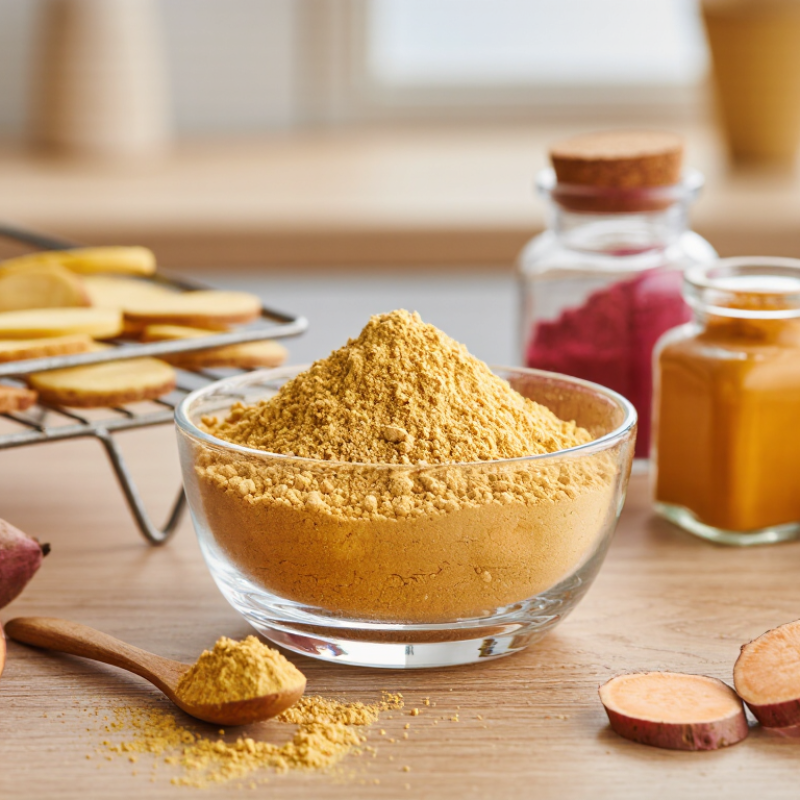
Organic Sweet Potato Powder: Definition Under USDA Organic Standards
Organic sweet potato powder is made by washing, drying, and grinding sweet potatoes into a fine, shelf-stable ingredient. Under USDA Organic standards, its definition depends on certified production and handling practices. The USDA National Organic Program regulates these requirements through 7 CFR Part 205.
A product labeled “organic” must contain at least 95% certified organic ingredients, excluding water and salt. The remaining ingredients need approval under the National List. A “100% organic” claim requires all agricultural ingredients to be certified organic. This distinction matters on a small package label.
The powder should come from organically grown sweet potatoes. Farmers cannot use prohibited synthetic pesticides, fertilizers, or genetically modified seeds. Certified handlers must also prevent contact with non-organic materials during drying, milling, storage, and packaging. One careless shared conveyor can create a serious compliance question.
The Organic Trade Association reported U.S. organic sales of 67.6 billion dollars in 2023. That figure shows strong consumer demand, but demand does not replace verification. Buyers should check the certifier, ingredient statement, and organic certificate. Color, sweetness, and a clean earthy aroma can suggest quality, but they cannot prove organic status. Testing may confirm contaminants, yet paperwork remains essential.
A practical weakness is often overlooked. USDA certification verifies the production system, not every nutritional claim. Powder still varies in fiber, moisture, and beta-carotene content. Storage conditions matter too; a warm, humid warehouse can produce clumping and flavor loss. Jiova?
From Certified Roots to Powder: Washing, Drying, and Milling Steps
What Is Organic Sweet Potato Powder?
Organic sweet potato powder begins with certified roots, not simply vegetables labeled “natural.” Certified handlers must protect organic integrity during receiving, storage, processing, and packaging under the USDA National Organic Program. FAOSTAT data show global sweet potato production has remained above 85 million tonnes in recent years, creating a substantial raw-material base. Yet quality still depends on the individual crop.
The process starts with washing. Clean, potable water removes soil, grit, and field residues. Workers then inspect the roots and trim damaged areas. Thin, even slices dry more consistently. Commercial food-processing studies commonly evaluate drying temperatures around 50–70°C. Excessive heat can darken the powder and reduce some sensitive nutrients. Gentle drying, however, may take longer and increase energy use. There is no perfect setting. Milling follows drying. A controlled mill turns crisp slices into a fine powder, while sieving removes coarse particles. This improves texture in bakery mixes, beverages, and baby-food formulations.
Tips: Check the organic certificate and processing scope. Ask for moisture, microbiological, and pesticide-residue test results. Powder should smell mildly sweet and earthy, not burnt or musty. A recent review in Foods notes that drying conditions strongly influence color, antioxidant retention, and rehydration behavior. Storage matters too. Use sealed, moisture-resistant packaging, because powder quickly absorbs humidity. One practical weakness remains: “organic” does not guarantee identical color or sweetness between harvests.
Organic Sweet Potato Powder: Typical Moisture Targets by Processing Stage
Certified organic sweet potatoes are washed, sliced, dried, and milled into powder. The main measurable change is moisture reduction during drying, which supports shelf stability and efficient milling. Values shown are representative processing reference ranges; actual results vary by cultivar and equipment.
Moisture content is commonly high in fresh roots and reduced to approximately 5–8% in finished powder.
Nutritional Profile per 100 g: USDA FoodData Central Reference Values
What Is Organic Sweet Potato Powder?
Nutritional Profile per 100 g: USDA FoodData Central Reference Values
Organic sweet potato powder is made from organically grown sweet potatoes that are washed, cooked or dried, and milled. Processing removes water, so the powder is more concentrated than a fresh root. USDA FoodData Central lists raw sweet potato at approximately 86 calories, 20.1 grams of carbohydrates, 3.0 grams of fiber, and 1.6 grams of protein per 100 grams. It also provides about 337 milligrams of potassium and 709 micrograms of vitamin A activity, expressed as RAE.
Those figures are useful reference points, not guaranteed powder values. Drying temperature, peeling, variety, and moisture content can change the final analysis. A laboratory report is better for exact powder nutrition. The USDA data also shows only 0.05 grams of fat per 100 grams in raw sweet potato. That does not mean every powder has the same number after processing.
Vitamin A activity deserves careful attention. The National Institutes of Health notes that provitamin A carotenoids vary in conversion efficiency. Orange-fleshed sweet potatoes usually contain more beta-carotene than pale varieties. Color matters here. Organic certification describes farming practices, not superior nutrient levels. A product may be organic yet nutritionally similar to a conventional equivalent. For practical use, measure powder by weight, check the moisture percentage, and avoid treating raw-food data as a direct label claim. The comparison is imperfect, but still useful.
What Is Organic Sweet Potato Powder? - Nutritional Profile per 100 g: USDA FoodData Central Reference Values
| Nutrient | Amount per 100 g | Unit |
| Energy | 351 | kcal |
| Water | 4.20 | g |
| Protein | 9.40 | g |
| Total fat | 0.80 | g |
| Carbohydrate | 82.70 | g |
| Dietary fiber | 13.50 | g |
| Total sugars | 12.50 | g |
| Calcium | 180 | mg |
| Iron | 4.49 | mg |
| Magnesium | 229 | mg |
| Phosphorus | 259 | mg |
| Potassium | 2,080 | mg |
| Sodium | 55 | mg |
| Zinc | 2.45 | mg |
| Vitamin C | 22.4 | mg |
Reference basis: USDA FoodData Central values for dried sweet potato, used as a composition reference for unsweetened sweet potato powder. Actual values may vary according to variety, processing method, and moisture content.
Organic Certification, Labeling, and FDA Food Safety Requirements
Organic sweet potato powder is made by washing, drying, and milling sweet potatoes into a fine, shelf-stable ingredient. Its color may range from pale orange to deep amber. Moisture control matters because damp powder can cake or support microbial growth. It is not automatically organic, however. The farm, processor, and handling steps must meet USDA organic standards.
USDA NASS reported $11.2 billion in certified organic product sales in its 2021 Organic Survey. That figure shows a sizeable market, but certification still requires evidence. An accredited certifier reviews supplier records, processing controls, cleaning procedures, and ingredient calculations. A product labeled “organic” generally needs at least 95% certified organic ingredients. “Made with organic” requires at least 70%, with stricter wording limits.
The FDA controls food safety, not organic certification. Under the Food Safety Modernization Act, applicable facilities need hazard analysis, preventive controls, sanitation procedures, and documented monitoring. FDA labeling rules also cover identity, net quantity, Nutrition Facts, and allergen declarations. Sweet potato is not a major U.S. allergen, yet shared equipment can create cross-contact concerns. Batch records should connect the farm lot to the finished pouch. That detail often separates a credible claim from a vague one.
Some labels still imply that “natural” means organic. It does not. Organic claims need certification. Testing alone cannot replace a compliant system. As FDA inspection data repeatedly show, documentation gaps remain a practical weakness in food facilities. Small processors may overlook calibration, cleaning verification, or moisture testing. That is where trust can quietly fail.