
How to Choose the Best Leather Recliner Sofa Set
Choosing the right Leather Recliner Sofa Set is not simply a matter of matching colors with your living room. It involves comfort, construction, space, maintenance, and daily habits. A beautiful sofa may still disappoint if its seat feels too firm, its footrest stops short, or its recline angle strains your neck. Measure the doorway, wall length, and walking space before shopping. Small details matter.
Furniture designer Michael Amini offers a practical reminder: “Comfort should be felt before style is judged.” That idea applies directly when comparing leather recliners. Sit fully back and test the lumbar support. Open and close each footrest slowly. Listen for unusual clicking sounds. Check whether the armrests support your elbows naturally. Genuine leather can develop character over time, but its surface still needs suitable cleaning and protection. Split leather and bonded leather may look similar in photographs, yet their durability can differ considerably.
A dependable Leather Recliner Sofa Set should also fit your household’s real routine. Families with children may need protected surfaces and easy-clean finishes. Tall users should examine seat depth and headrest height carefully. Compact rooms may require wall-hugger recliners, which need less clearance behind the frame. Do not trust labels alone. Ask about the frame material, reclining mechanism, warranty, and replacement parts. I have found that buyers often focus on appearance first, then regret ignoring support. That mistake is common. Comfort is personal, and no guide can replace sitting in the sofa yourself. Take your time, test every seat, and accept that the perfect choice may look less impressive than expected.
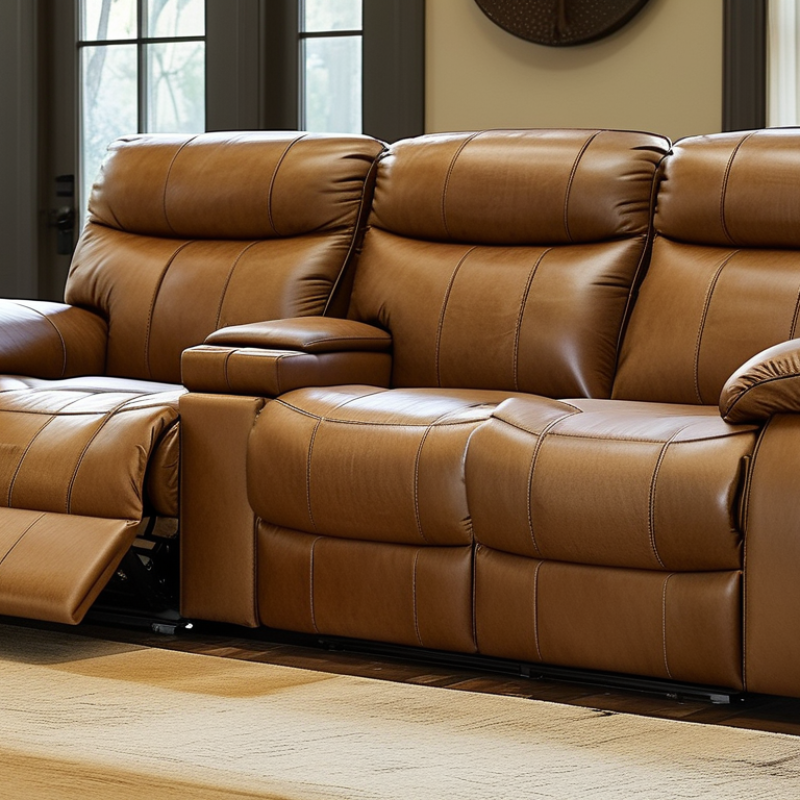
Define Your Space, Seating Needs, and Recliner Set Size
Choosing a leather recliner sofa set starts with your room, not the showroom display. Measure the wall, doorway, stairwell, and elevator before comparing styles. Record the room’s length and width, then mark windows, vents, outlets, and walking paths. Leave at least 30 to 36 inches for comfortable movement around the sofa.
Your seating needs should guide the set size. A two-seat recliner may suit a compact apartment or quiet reading area. A three-seat set works better for family viewing and regular guests. Count the people who usually sit together, not the largest possible crowd. Each recliner also needs space to extend fully. Keep roughly 12 to 18 inches behind a reclining back, unless the design uses a wall-saving mechanism. Measure the extended footrest too. It can reach farther than expected.
I once saw a room look spacious in a floor plan but feel crowded after delivery. The missing detail was the open footrest distance. That mistake is easy to repeat. Use painter’s tape to outline the sofa’s footprint on the floor. Sit inside the marked area and check whether tables, doors, and walkways still work. Consider comfort differences as well. Taller users may need deeper seats and longer footrests, while smaller users often need stronger lumbar support. Check the manufacturer’s exact dimensions, weight guidance, reclining clearance, and leather-care instructions before ordering. Furniture measurements can be confusing. Measure twice.
How to Choose the Best Leather Recliner Sofa Set
Define your space, seating needs, and recliner set size before you buy.
Define Your Space
Measure wall width, doorway access, and walking paths. Leave enough room for the recliner mechanism to extend safely.
Match Seating Needs
Choose two seats for compact rooms, three seats for everyday family use, or four seats when flexible seating is a priority.
Plan Reclining Clearance
A practical planning allowance is approximately 12 inches behind the sofa and 18 inches in front of the footrest.
Typical planning estimates in inches. Actual dimensions vary by sofa design and reclining mechanism; always verify the product specifications.
Compare Leather Types, Quality, and Long-Term Durability
When choosing a leather recliner sofa set, start with the leather’s surface and core, not its color. Full-grain leather keeps the natural grain and usually develops a richer patina. Top-grain leather is corrected slightly, so it offers a more uniform appearance. Split leather and bonded leather cost less, but their coatings may crack sooner under heat, friction, and frequent reclining.
The Leather Naturally industry factsheet estimates that about 1.4 billion hides enter the global leather supply each year. Most are byproducts of the meat industry. This matters, but it does not prove a sofa is durable. Ask for the leather grade, backing material, finish, and foam density. The British Furniture Confederation recommends checking upholstery performance data rather than trusting vague terms such as “premium.” A credible seller should provide abrasion results, frame construction details, and warranty conditions.
Look closely at the stress points. Seams should remain even around the footrest and seat corners. Kiln-dried hardwood or reinforced metal mechanisms generally resist movement better than thin composite frames. The Association for Contract Textiles testing guidance commonly treats 15,000 double rubs as suitable for moderate use, while heavier-use furniture may need substantially higher results. Still, abrasion tests are not real living rooms. A household with pets, denim clothing, or children can expose weaknesses faster. I would choose corrected-grain leather with strong test documentation over impressive wording. Even then, no sofa stays perfect without cleaning, conditioning, and careful moisture control.
Evaluate Reclining Mechanisms, Comfort, and User-Friendly Features
Choosing the best leather recliner sofa set starts with its reclining mechanism. Test each seat several times, not just once. A power recliner should move smoothly without sudden stops or loud motor noise. Check whether the footrest opens fully and returns without forcing your legs forward. Manual models need a firm, reachable handle that does not strain your wrist. I once preferred a faster mechanism, but slower movement felt safer and more controlled. Small differences matter during daily use.
Comfort requires more than soft cushions. Sit with your back fully supported for at least ten minutes. Your lower back should meet the lumbar area without a gap. Keep both feet relaxed when the footrest is extended. Examine the seat depth, armrest height, and head support carefully. Some leather feels luxurious at first but becomes warm after prolonged sitting. That detail is easy to miss. User-friendly features should remain simple. A clearly labeled remote, accessible USB port, and easy-clean surface can improve everyday use. However, extra buttons may confuse older users. Ask about frame construction, reclining-cycle testing, leather care, and warranty coverage. Inspect stitching around corners and joints. Perfect comfort is not guaranteed, so allow room to reconsider your first impression.
Check Frame Construction, Cushion Support, and Upholstery Details
Choosing a leather recliner sofa set starts beneath the surface. A strong frame should feel stable when you sit, recline, and rise. Kiln-dried hardwood often resists warping and moisture changes. Look for reinforced corner blocks and tightly fitted joints. Gaps can signal weak construction.
Test every reclining mechanism slowly. It should move smoothly without grinding, wobbling, or sudden stops. Check whether the footrest closes fully. Measure wall clearance before delivery. I once overlooked this detail, and the recliner could not open properly. That mistake was expensive and avoidable.
Cushion support affects comfort more than showroom softness. High-resilience foam usually keeps its shape better than low-density filling. Layered foam and fiber can add softness without making the seat collapse. Sit for at least ten minutes. Short tests can mislead. Press the cushion edges and watch how quickly they recover. Some softness feels luxurious at first, but may create poor posture later. I still prefer a balanced seat, though personal comfort varies.
Examine the upholstery under bright, natural light. Even grain, consistent color, and clean stitching suggest careful production. Full-grain leather can develop character, while heavily corrected leather may offer a more uniform appearance. “Genuine leather” alone does not guarantee high quality. Ask which surfaces use leather and which use matching material. Check seam tension, hidden staples, and exposed edges. Request care instructions and warranty terms in writing. Leather may resist daily wear, but it still needs gentle cleaning and protection.
Balance Price, Care Requirements, Warranty, and Delivery Options
Price should match construction, care needs, and long-term comfort. A low price may hide thin leather, weak reclining mechanisms, or limited support. Check the frame material, stitching, seat density, and footrest movement before buying. Sit for at least ten minutes. Notice pressure around your hips and lower back. I once chose a cheaper recliner without checking the mechanism. It felt fine in the showroom but became noisy within months. That mistake changed how I compare furniture.
Leather care also affects the real cost. Ask whether the surface is full-grain, corrected-grain, or coated leather. Request written cleaning instructions. Keep the sofa away from direct sunlight and heat vents. Use a soft cloth for dust, not household chemicals. A useful warranty should clearly cover the frame, reclining system, leather, and labor. Read exclusions carefully. Some warranties sound generous but exclude normal wear, stains, and mechanism adjustments.
Tips:
Measure every doorway, hallway, and stair turn before ordering. Confirm the packed sofa dimensions, not only the assembled size. Ask about delivery dates, room placement, packaging removal, and return fees. Get these details in writing. Delivery delays can disrupt a room project, and return shipping may be expensive. Compare the final price after care products, delivery, warranty limits, and possible service charges. Leave space behind each recliner. It may need more clearance than expected.
Article Source:
DISCOVER THE POTENTIAL OF INNOVATIVE PROSTHETICS
From minor to severe injuries, our team develops advanced devices designed to support recovery and promote overall wellness.
