How to Choose Large Outdoor Ceramic Flower Pots
Outdoor containers do more than hold plants; they shape the feel of a patio, entryway, or garden. The National Gardening Association’s 2024 National Gardening Survey reports that 80% of U.S. households participated in lawn and garden activities in 2022. That broad interest makes a durable, well-sized planter a practical purchase, not merely a decorative one. Still, a large pot can be wrong for its setting.
Choosing ceramic flower pots large outdoor means balancing plant needs, local weather, and the weight of a filled container. Check mature root space, drainage holes, and overall dimensions before focusing on glaze or color. Glazed ceramic may retain moisture differently from unglazed materials, while a large pot can become very heavy when filled with wet soil. Small detail. On exposed patios and balconies, consider wind, frost, and safe placement. University extension guidance and the manufacturer’s care instructions are useful checks, though neither can account for every local condition.
This guide explains how to compare size, material, drainage, stability, and maintenance before buying. It separates practical requirements from style preferences, so a statement piece does not crowd a doorway or overwhelm a young shrub. No single size suits every plant. Treat listed dimensions as a starting point, then allow for soil, watering, and access when moving the pot. That last step is easy to miss.
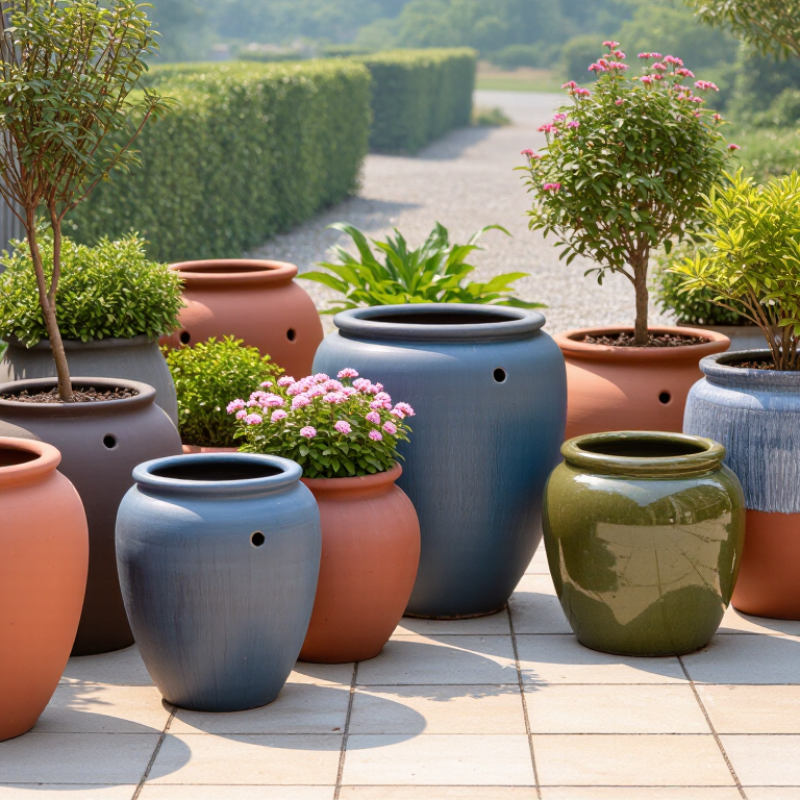
Determine the Planting Needs and Intended Location
Before choosing a large outdoor ceramic flower pot, match its size to the plant’s mature root system, not just the small nursery pot. A young olive tree or tall grass needs room for roots and enough soil to stay evenly moist. But an oversized pot can hold wet soil for too long around a small root ball. Check the plant’s expected width and height, then allow space for healthy growth. Roots need breathing room.
The intended location matters just as much. Measure the patio corner or balcony space, and note how many hours of direct sun it receives. A dark, sheltered spot may suit shade-loving plants, while herbs often need stronger light. Consider wind, too: tall plants can catch gusts, and a broad ceramic pot may still tip if its soil is dry. Large pots become very heavy once filled. Place one where it can stay, or use a wheeled base rated for its weight.
Check drainage before planting. Water should escape through a drainage hole rather than pool around the roots; raise the pot slightly so the opening stays clear. In cold regions, standing water may freeze and stress the ceramic. A liner can seem convenient, but it may also trap moisture if fitted poorly. It is a small detail, easy to miss. I would rather check the base twice than discover the problem after planting.
Choose the Right Pot Size, Shape, and Depth
Choosing a large outdoor ceramic pot starts with the plant, not the patio. Measure the root ball, then allow a few inches of space around it for fresh potting mix and future growth. A pot that is dramatically oversized can stay wet longer than expected, especially in cool or rainy weather. That detail is easy to overlook. Check that the container has drainage holes, and raise it slightly on pot feet if water tends to collect beneath it.
Match depth to the roots. Shallow-rooted herbs and compact flowers can do well in a wide, moderate-depth pot, while tomatoes, small trees, and plants with deep roots need more soil below them. Shape matters, too. A broad base helps steady tall plants in wind; a narrow-necked pot may look elegant but can make repotting awkward. Before filling a heavy ceramic pot, choose its final spot. Moving it later is no small job. I would not choose the deepest pot simply because it seems safer; extra soil can hold moisture the plant does not need. Check the plant’s mature size and your local watering conditions, then choose a pot that leaves room without becoming cumbersome.
Compare Ceramic Types, Drainage, and Weather Resistance
Large outdoor ceramic flower pots vary in how they handle water and temperature. Glazed ceramic has a sealed surface that resists moisture, while unglazed terracotta-like clay allows more air exchange but dries faster. That difference matters in sunny, windy gardens. Check the pot’s weight, wall thickness, and care instructions before buying; a heavy pot can be difficult to move once filled.
Drainage is essential. Look for an open hole at the base, not a shallow indentation that only resembles one. After watering, excess moisture should escape rather than collect around the roots. Pot feet can lift a large container above paving and prevent the hole from sitting in pooled water. A saucer may protect a deck, but empty it after rain. Small detail. It is easy to forget.
Weather resistance depends on the clay, glaze, and local conditions. In freeze-thaw climates, water absorbed into porous ceramic can expand and cause cracks. Choose a pot specifically rated for outdoor freezing conditions, and avoid letting its base remain submerged. Even a suitable pot may need shelter during severe winters. I would not assume that a thick wall guarantees durability; specifications and drainage tell a clearer story. A beautiful pot can still be a poor fit for an exposed, wet patio.
Evaluate Weight, Stability, and Placement Requirements
A large ceramic pot’s real load is more than its listed empty weight. Add the pot, mature plant, growing medium, and water held after rain. Each liter of retained water adds about one kilogram. Check the pot maker’s empty-weight figure, then ask for the filled weight if it is unavailable. USDA NRCS’s Soil Quality Test Kit Guide treats bulk density as a measured property; don’t use ordinary garden-soil figures as a precise estimate for lightweight potting mix. Leave a margin for saturated soil. It happens.
Stability depends on more than weight. A broad base and low planting arrangement help resist tipping, while a tall, narrow pot can catch gusts. ASCE 7-22 evaluates wind loads using local wind speed and exposure, a useful reminder that an open roof deck differs from a sheltered courtyard. Place the pot on level, load-rated paving, away from balcony edges, door swings, and drainage paths. On a balcony or roof, confirm the allowable load with the property manager or a qualified structural professional. Felt pads can protect paving, but they may also reduce grip when wet. I would not assume a heavy pot is automatically stable; test its position gently, and reassess after the plant grows.
How to Choose Large Outdoor Ceramic Flower Pots - Evaluate Weight, Stability, and Placement Requirements
| Pot size (diameter × height) | Approx. capacity | Typical empty ceramic weight | Estimated filled, wet weight | Stability considerations | Placement requirements |
35–40 cm × 30–35 cm
(14–16 in × 12–14 in) | About 20–30 L | About 8–14 kg
(18–31 lb) | About 28–44 kg
(62–97 lb) | Choose a wider base if the plant has a tall canopy or the site is exposed to wind. | Use a level, firm surface; confirm the pot has drainage holes and a suitable saucer or drainage area. |
50–60 cm × 40–50 cm
(20–24 in × 16–20 in) | About 45–65 L | About 15–25 kg
(33–55 lb) | About 55–90 kg
(121–198 lb) | A broad footprint and evenly distributed planting help reduce the chance of tipping. | Place near its final position before filling. Check that paving is even and can support the concentrated load. |
65–75 cm × 50–60 cm
(26–30 in × 20–24 in) | About 80–110 L | About 25–40 kg
(55–88 lb) | About 90–150 kg
(198–331 lb) | Prefer a low, wide shape in windy locations; avoid placing a tall plant in a narrow-based pot. | Use a ground-level patio or a verified load-bearing surface. Avoid carrying the pot after adding soil. |
80–90 cm × 60–75 cm
(31–35 in × 24–30 in) | About 130–170 L | About 40–65 kg
(88–143 lb) | About 145–235 kg
(320–518 lb) | The high total mass improves resistance to tipping, but strong gusts can still affect tall or top-heavy plants. | Set directly on stable ground or a structurally checked patio. Keep clear of edges, steps, and narrow balconies. |
Estimates are approximate. Filled-weight ranges include the empty pot and assume a typical container volume filled with potting mix at roughly 0.8–1.0 kg per litre when wet; actual weight varies with the mix, drainage, and water content. For balconies, decks, or rooftops, check the structure’s permitted load with a qualified professional before placing heavy planters.
Select a Finish and Plan for Care and Maintenance
A finish is more than a color choice; it changes how a large ceramic pot weathers. Glazed surfaces usually wipe clean more easily, while unglazed clay can absorb water and show mineral deposits. Check the drainage hole and inspect the glaze for hairline cracks before buying. A beautiful finish cannot fix poor drainage. The National Gardening Association’s 2024 National Gardening Survey reports that 80% of U.S. households took part in lawn or garden activities in 2023, making practical care choices relevant to many home gardens.
Plan for the pot’s location and local weather. Set it on sturdy feet so water can escape, and avoid leaving it in standing water. In regions with freezing winters, damp ceramic may crack as trapped water freezes; move the pot under cover or empty it before cold weather. Wipe salt marks with a soft brush and clean water, then let the pot dry fully. Harsh scrubbers can dull a glossy finish. I still tend to underestimate how heavy a large pot becomes after watering.
Tips: Compare the pot’s finish in direct sunlight, where color and surface texture look different. Check drainage monthly, and use a saucer only if you can empty it promptly. For winter storage, protect the rim and avoid stacking pots. These steps reduce avoidable wear, though they cannot prevent every crack.
How to Choose Large Outdoor Ceramic Flower Pots: Finish and Seasonal Care
Glazed finishes are generally easier to wipe clean, while unglazed ceramic can absorb more moisture. For outdoor use, check the pot’s frost-resistance guidance and make sure it has drainage holes. The chart counts practical care checks for each season; adjust them for your climate.
Seasonal checklist: Spring—inspect for cracks, clear drainage holes, and clean deposits. Summer—check soil moisture and empty saucers. Autumn—remove debris, raise the pot off the ground, and shelter it if needed. Winter—reduce freeze-thaw exposure and keep drainage clear.