What Is Cell RNA Extraction and How Does It Work?
Cell Rna Extraction is the process of isolating RNA from cells for analysis, measurement, or downstream molecular research. It begins with carefully collected biological material. The cells are stabilized, opened, and treated with chemical solutions that protect RNA from degradation. RNA is fragile. Even a brief delay, warm bench, or contaminated pipette can reduce its quality.
As Nobel Prize-winning biochemist Thomas Cech has said, “RNA is a molecule with both information and catalytic functions.” This dual role explains why reliable extraction matters. Researchers may use purified RNA to examine gene expression, compare cellular responses, or prepare samples for sequencing. The workflow usually includes cell lysis, removal of proteins and DNA, RNA binding or precipitation, washing, and elution. Each stage requires controlled handling, clean equipment, and suitable reagents.
In practice, Cell Rna Extraction is not simply a routine separation step. It is a quality-sensitive process. A clear sample can still contain inhibitors. A high concentration reading can still hide fragmented RNA. Experienced laboratories therefore check purity ratios, concentration, and, when necessary, RNA integrity. These measurements support more defensible conclusions. However, no protocol eliminates every source of variation. Cell type, sample age, storage conditions, and operator technique can all influence results. That limitation deserves attention. Understanding how the method works helps researchers select an appropriate protocol, recognize weak data, and improve the reliability of later experiments.
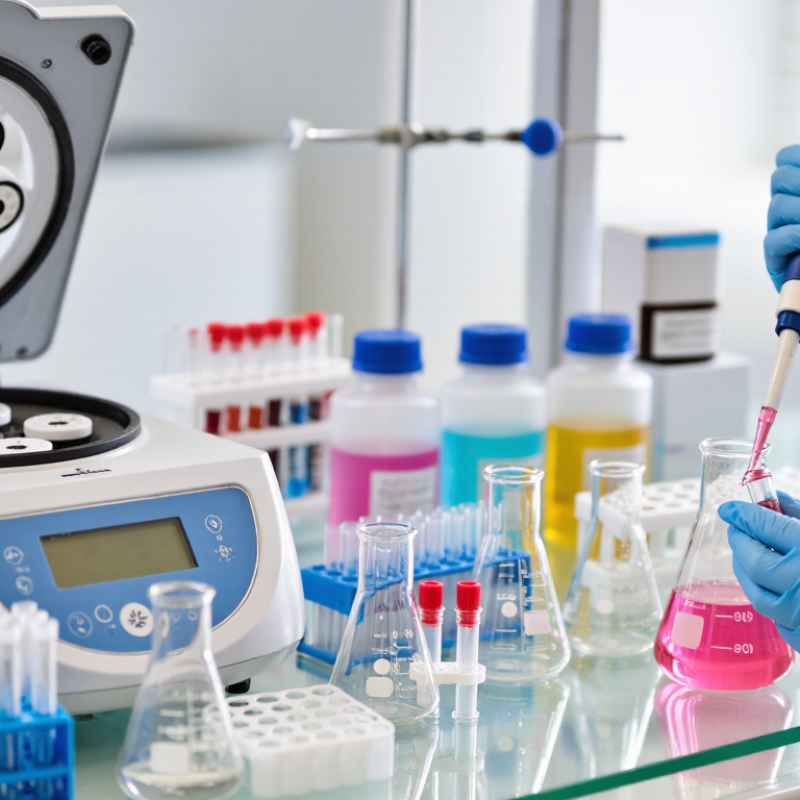
What Cell RNA Extraction Is and Why It Matters
Cell RNA extraction is the process of releasing RNA from cells, removing proteins and genomic DNA, then preserving the purified molecules for analysis. The workflow usually involves cell lysis, chemical or membrane-based purification, washing, and quality testing. RNA is fragile. Warm benches, delayed processing, or careless handling can quickly reduce its usefulness.
Why does this matter? RNA shows which genes are active at a specific moment. DNA describes potential; RNA captures cellular response. Researchers use these patterns to study disease mechanisms, immune activity, development, and treatment effects. A 2024 industry market analysis estimated the global RNA sequencing market at more than 4 billion US dollars, with strong projected growth through 2030. That expansion reflects rising demand for reliable transcript data, not merely newer instruments.
Quality begins before extraction. Fresh samples should be processed consistently, with RNase contamination controlled and sample identity documented. Concentration alone is not enough. Integrity, purity ratios, and storage history can change sequencing results. The National Institutes of Health notes that low-quality RNA can compromise downstream genomic analysis and increase wasted effort. In practice, the workflow is less elegant than diagrams suggest. Small timing differences matter. Even experienced teams can miss degradation when samples look clear. I would also question any protocol promising perfect recovery, because cell type, sample size, and handling conditions always introduce variation.
How Cells Are Prepared for RNA Extraction
What Is Cell RNA Extraction and How Does It Work?
How Cells Are Prepared for RNA Extraction
Cell RNA extraction begins before any tube is opened. The sample must be collected quickly, because cellular RNases can degrade RNA within minutes. Researchers usually separate unwanted liquid, remove debris, and wash cells with a cold, RNase-free solution. Cell number also matters. Too few cells may produce weak signals, while overcrowding can reduce lysis efficiency.
Do not rush this step.
Lysis then breaks the cell membrane and releases RNA. A carefully chosen buffer protects RNA while disrupting proteins and other structures. For tissue samples, mechanical disruption may be needed. Homogenization should be firm but controlled; excessive force can heat the sample. In my experience, a clear lysate is not always a good lysate. It may still contain genomic DNA, salts, or incomplete cellular debris.
Quality checks make the preparation defensible. The MIQE guidelines recommend evaluating RNA purity and integrity, rather than trusting concentration alone (Bustin et al., Clinical Chemistry, 2009). RNA integrity is commonly scored from 1 to 10. Higher values indicate less degradation, although the acceptable threshold depends on the downstream assay (Schroeder et al., BMC Molecular Biology, 2006). The ENCODE Consortium handled 1,640 datasets across 147 cell types, showing why consistent preparation is essential for comparing biological results (Nature, 2012). Small handling differences remain easy to overlook. That is the weak point.
How Cell Lysis Releases RNA from Cells
Cell RNA extraction begins with controlled cell lysis. Lysis breaks the plasma membrane and, when needed, the nuclear envelope. A suitable buffer weakens lipid layers while protecting RNA from degradation. Detergents dissolve membranes. Salts help stabilize released molecules. Some samples also need gentle mechanical force, such as careful pipetting or brief homogenization. The goal is not simply to make a cloudy liquid. It is to release RNA evenly without shredding it or heating the sample. Work quickly. Keep samples cold. RNases are common and persistent.
Once the cells open, RNA enters the lysate with proteins, DNA, lipids, and cellular debris. Clarification removes larger particles through centrifugation or filtration. RNA is then captured by a selective binding surface or separated through precipitation. Washing removes salts and residual contaminants. A final elution places the RNA in a small volume for downstream analysis. Clean technique matters at every step. Even a clean-looking tube can contain RNase contamination. I have found that inconsistent mixing can produce uneven yields between identical samples. That result deserves investigation, not blind repetition. Over-lysis may increase debris, while under-lysis leaves RNA trapped inside intact cells. Visual inspection helps, but it cannot confirm RNA integrity. Concentration and purity measurements, followed by an integrity check when possible, provide stronger evidence. No protocol is flawless. Sample type, cell density, and handling time can change the outcome.
What Is Cell RNA Extraction and How Does It Work?
Cell lysis breaks the plasma membrane and releases intracellular RNA into the extraction solution. In a typical mammalian cell, ribosomal RNA represents the largest fraction of total RNA, while messenger RNA accounts for only a small proportion.
Approximate cellular RNA composition: rRNA about 80–85%, tRNA about 10–15%, mRNA about 1–5%, and other non-coding RNA about 1–5%. Actual proportions vary by cell type and physiological state. During lysis, detergents and chaotropic agents disrupt membranes and help protect released RNA from degradation.
The Main Steps in Separating and Purifying RNA
Cell RNA extraction begins with careful sample collection and immediate protection from degradation. The goal is not merely to release RNA, but to preserve its original condition. Researchers usually keep cell samples cold and work with clean, RNase-free tools. A lysis solution breaks open cell membranes and dissolves proteins. Mechanical mixing helps release RNA from dense or clumped material. This stage is easy to underestimate. Uneven lysis can leave RNA trapped inside cells, reducing the final yield. In my experience, gentle but complete mixing often works better than aggressive handling.
After lysis, centrifugation removes large debris and insoluble material. Depending on the method, RNA moves into a separate liquid phase or binds to a purification surface. Contaminants are removed through repeated washing steps. These washes must be thorough, but excessive liquid can dilute the sample during recovery. Enzymatic treatment may remove residual DNA, which is important for reliable gene expression analysis. The purified RNA is then eluted in a small volume of clean solution. Less volume can increase concentration, but it may also make pipetting errors more noticeable.
Quality checks usually measure RNA concentration, purity, and structural integrity. Absorbance readings are useful, yet they cannot reveal every inhibitor. A sample can look acceptable and still perform poorly in later experiments. This is why researchers often compare purity data with electrophoresis or instrument-based integrity results. No extraction is perfectly clean. Careful handling, consistent timing, and honest review of weak results improve the process over time.
How RNA Quality Is Measured After Extraction
Cell RNA extraction releases RNA from cells, removes proteins and DNA, then concentrates the purified molecules. Lysis breaks the cell membrane. Binding, washing, and elution follow. The final tube may hold only a few microliters of RNA. Quality testing then determines whether that sample suits sequencing or quantitative PCR.
A spectrophotometer measures purity. Healthy RNA often shows an A260/280 ratio near 2.0. The A260/230 ratio usually falls between 2.0 and 2.2. Lower values may signal salts, proteins, or solvent carryover. These figures are useful, but incomplete. The MIQE guidelines state that purity and integrity require separate evaluation (Bustin et al., Clinical Chemistry, 2009). A fragment analyzer reports the RNA Integrity Number, or RIN, on a scale from 1 to 10. Many transcriptomic workflows prefer RIN 8 or higher. ENCODE quality standards also use high-integrity RNA for bulk RNA sequencing. For damaged samples, DV200 can be more informative. It measures the percentage of RNA fragments longer than 200 nucleotides. Values above 70% are often considered workable for degraded material. Context still matters.
Tips: Check concentration with fluorescence when purity ratios seem suspicious. Inspect the electropherogram, not only the RIN. A clean number can hide partial degradation. I would repeat extraction when the sample is precious, though this increases handling risk. Keep samples cold, limit freeze-thaw cycles, and record every measurement. Small mistakes remain possible.