
What Are the 2026 Top Aluminium Melting Furnace Types?
Choosing the right aluminium melting furnace in 2026 requires more than comparing advertised efficiency figures. Real performance depends on alloy selection, batch size, charging habits, temperature control, and daily operating discipline. A small foundry may value a compact gas-fired crucible furnace, while a high-volume plant may need a regenerative or electric resistance system. Induction furnaces can offer rapid heating and accurate control, especially where clean melting and flexible production matter. They are not automatically the best choice.
Practical experience shows that furnace design affects metal quality, worker safety, maintenance time, and energy costs. Operators notice these differences around the charge door, burner chamber, thermocouple, and refractory lining. Excessive dross can signal poor temperature management, unsuitable flux practice, or unnecessary holding time. Electric systems may provide cleaner operation, yet their installation can require stronger power infrastructure. Gas-fired models may deliver high output, but combustion settings and exhaust management demand careful attention. No furnace wins every test.
This guide examines the leading 2026 aluminium melting furnace types, including gas-fired, electric resistance, induction, and hybrid designs. It compares heating speed, thermal efficiency, melt cleanliness, capacity, control accuracy, and maintenance demands. Manufacturer claims should be checked against measured fuel use, recovery time, and alloy-specific results. Independent testing and qualified engineering advice remain valuable. The analysis also recognizes an uncomfortable truth: some published comparisons simplify real workshop conditions. Furnace selection should therefore reflect documented operating data, not fashionable specifications alone.
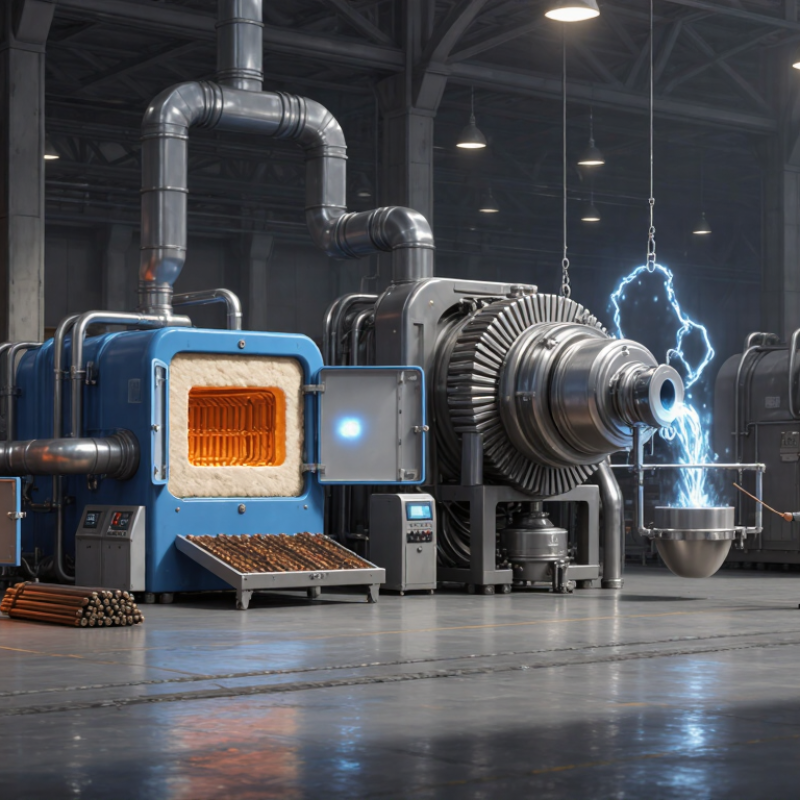
Aluminium Melting Furnaces: Definition and Core Working Principles
What Are the 2026 Top Aluminium Melting Furnace Types?
Aluminium melting furnaces convert solid charge into a controlled liquid bath. Operators add ingots, clean scrap, or prepared chips. The furnace then supplies heat through combustion, electrical resistance, or electromagnetic induction. Heat transfer matters. A reverberatory furnace uses flame and radiant heat above the bath. It suits high-volume foundries and continuous production. A rotary furnace tumbles charge materials, improving contact with heat and helping process contaminated scrap. A crucible furnace remains practical for small batches and flexible alloy changes.
Induction furnaces create electric currents inside the metal. This produces rapid, clean heating with strong temperature control. However, they can be less convenient for large, irregular scrap loads. Energy performance depends on charge cleanliness, furnace insulation, loading practice, and holding time. The International Aluminium Institute reports that secondary aluminium can require about 95% less energy than primary production, making efficient scrap melting increasingly important. Its Aluminium Sector Greenhouse Gas Pathways to 2050 also highlights recycling and process efficiency as major decarbonisation measures.
A typical cycle includes charging, melting, alloy adjustment, temperature checking, degassing, skimming, and tapping. Poorly dried charge materials can cause dangerous splashing. Excessive holding can increase oxidation and metal loss. That detail is often underestimated. The best 2026 furnace type therefore depends on throughput, scrap quality, alloy range, emission controls, and electricity costs. Industry decisions should compare measured fuel use, melt-loss records, and maintenance data, not catalogue claims alone. Sources: International Aluminium Institute, Aluminium Recycling Saves 95% Energy; Aluminium Sector Greenhouse Gas Pathways to 2050.
Main Furnace Types Used for Aluminium Melting in 2026
What Are the 2026 Top Aluminium Melting Furnace Types?
In 2026, aluminium melting lines commonly use reverberatory, crucible, rotary, induction, and electric resistance furnaces. Each type suits a different production rhythm. The choice depends on alloy, charge size, scrap cleanliness, energy access, and required melt temperature. A practical assessment starts with feedstock, not equipment brochures.
Reverberatory furnaces support medium and high output operations. Their heated chambers melt metal indirectly and allow steady charging. They offer useful capacity, but dross formation and heat loss require close control. Crucible furnaces suit foundries, laboratories, and small batches. They support simple operation and quick alloy changes. Operators still need to monitor wall wear, lifting safety, and temperature variation. Small does not mean risk-free.
Rotary furnaces handle mixed or oxidized scrap effectively. Strong agitation can improve metal recovery, while lining condition and exhaust control affect performance. Induction furnaces provide rapid, controllable heating without direct flame contact. They work well with clean, consistent charges, although stirring may increase oxidation in some conditions. Electric resistance furnaces provide stable melting and holding temperatures. They may be less attractive where electricity costs are high. Before purchase, test real charge materials and record melt time, energy use, dross rate, and temperature stability. A clean trial can mislead. In actual plants, the first selection is not always right.
What Are the 2026 Top Aluminium Melting Furnace Types?
Aluminium foundries commonly select furnace technology according to batch size, melting rate, fuel availability, alloy flexibility, and environmental requirements.
Typical capacity ranges: Reverberatory furnaces are generally preferred for high-volume production, while crucible, electric resistance, induction, and rotary furnaces are more suitable for small- to medium-scale melting or specialized scrap processing. Actual capacity varies by furnace design and installation.
Fuel, Electric, and Hybrid Heating Systems Compared
What Are the 2026 Top Aluminium Melting Furnace Types?
Fuel, electric, and hybrid furnaces serve different aluminium melting conditions. Gas-fired reverberatory furnaces remain practical for large batches, especially where fuel infrastructure is reliable. They offer strong heat capacity and straightforward operation. However, combustion creates exhaust gases, and metal oxidation can increase during poorly controlled heating. The U.S. Department of Energy reports that process heating represents about 51% of energy use in American manufacturing. Furnace efficiency therefore matters greatly.
Electric resistance furnaces provide clean, controllable heat at the melting chamber. They suit foundries requiring stable temperatures, quieter operation, and lower local emissions. Induction furnaces heat metal rapidly and can reduce holding losses, although they require suitable electrical capacity and careful charge preparation. The International Aluminium Institute identifies energy reduction and renewable electricity as major decarbonisation priorities for aluminium production. Electric heating is not automatically low-carbon. Its environmental value depends on the power supply.
Hybrid systems combine fuel burners with electric elements or induction assistance. They can maintain production during grid limitations while reducing fuel consumption during holding or peak-demand periods. This flexibility is useful for recyclers processing variable scrap loads. European Aluminium’s sector roadmap highlights electrification, energy efficiency, and renewable power as important pathways toward lower emissions. Yet hybrid controls add cost and complexity. Small operators may underestimate maintenance needs. My practical view is cautious: fuel systems often win on capacity, electric systems on control, and hybrid furnaces on resilience. The best 2026 choice depends on batch size, electricity quality, scrap chemistry, ventilation, and required temperature stability.
Key Factors for Selecting an Aluminium Melting Furnace
Selecting an aluminium melting furnace starts with production reality, not a catalogue ranking. Reverberatory furnaces suit large, continuous batches and mixed scrap. Rotary furnaces handle contaminated or oxide-rich charge materials more effectively. Crucible furnaces remain practical for smaller foundries, frequent alloy changes, and limited floor space. Induction furnaces offer precise temperature control and fast response, but their electricity demand requires careful site planning.
Start with the charge profile. Clean ingots, coated scrap, and machining chips behave differently inside the furnace. The International Aluminium Institute reports that aluminium recycling uses about 95% less energy than primary production, making scrap preparation an important operating factor. A furnace that tolerates dirty feedstock may reduce preparation work, yet it can increase dross formation and metal loss.
Throughput matters too. Measure tonnes per hour, not only chamber capacity. The U.S. Department of Energy’s Industrial Decarbonization Roadmap identifies process efficiency and electrification as major industrial priorities. This supports evaluating furnace heat recovery, insulation, standby consumption, and emissions controls. Safety access, refractory life, maintenance skills, and spare-part availability also affect ownership cost.
An apparently cheaper furnace can become expensive through long heating cycles or unstable temperature control. I would not choose induction automatically for every low-carbon project. Electricity prices, grid capacity, alloy requirements, and batch size can change the result. Use measured plant data, trial melts, and realistic scrap conditions before approving the final design.
Safety, Efficiency, and Environmental Standards in 2026
What Are the 2026 Top Aluminium Melting Furnace Types?
Safety, Efficiency, and Environmental Standards in 2026
In 2026, aluminium foundries are choosing furnaces by risk control, energy use, and emissions performance. Reverberatory furnaces remain suitable for large batches and mixed scrap. Their broad chambers support steady production, but poorly sealed doors can waste heat. Modern designs use insulated linings, automated charging, and regenerative burners to reduce fuel demand. Moisture remains dangerous. Even a wet tool can cause a violent molten-metal reaction.
Rotary furnaces offer flexible melting for contaminated or variable scrap. Tilting mechanisms can improve pouring control and reduce operator exposure. However, moving equipment needs reliable interlocks, guarding, and scheduled inspections. Induction furnaces provide accurate temperature control and cleaner operation, especially for smaller batches or high-quality alloys. They usually require substantial electrical capacity and careful coil maintenance. The best choice depends on charge material, production volume, and local power conditions.
Environmental performance now includes more than lower fuel consumption. Effective furnaces capture dust, limit visible fumes, and control nitrogen oxide emissions where applicable. Heat recovery systems can warm combustion air or process water. Digital sensors also track temperature, energy intensity, door openings, and filter pressure. These details help maintenance teams find waste before it becomes expensive. Still, automation is not a substitute for training. Operators need tested emergency procedures, dry tools, protective equipment, and clear access routes. No furnace is perfect. A design may look efficient on paper, yet perform poorly when maintenance budgets or scrap quality change.
What Are the 2026 Top Aluminium Melting Furnace Types? - Safety, Efficiency, and Environmental Standards in 2026
| Furnace Type | Typical Application | Typical Capacity Range | Typical Energy Characteristics | Melting and Holding Performance | Key Safety Controls | Environmental Considerations | Best-Fit 2026 Use Case |
|---|---|---|---|---|---|---|---|
| Gas-Fired Reverberatory Furnace | High-volume primary or secondary aluminium melting; common in foundries and remelting operations. | Approximately 1–100 tonnes per batch, depending on furnace design. | Uses natural gas, LPG, or other gaseous fuels. Energy use is strongly affected by charge density, door openings, furnace insulation, and exhaust heat recovery. | High throughput and large bath surface; suitable for continuous or batch operation. Longer heat-up and melt cycles than induction systems are typical. | Flame supervision, automatic fuel shut-off, combustion-air interlocks, pressure monitoring, refractory inspection, molten-metal containment, and controlled charging. | Produces combustion emissions, including carbon dioxide and nitrogen oxides. Regenerative or recuperative burners and exhaust filtration can reduce fuel use and emissions. | Large plants where high capacity, fuel availability, and heat recovery justify the installation. |
| Electric Resistance Furnace | Batch melting, holding, heat treatment, and applications requiring a clean, quiet furnace environment. | Approximately 50 kg to 10 tonnes, with larger custom installations available. | Converts electrical energy into heat through resistance elements. On-site combustion emissions are very low, but total carbon impact depends on the electricity source. | Good temperature uniformity and precise control; melting speed is usually moderate and depends on installed power and insulation quality. | Electrical isolation, over-temperature protection, door and lid interlocks, element protection, grounding, and safe handling of molten metal. | No direct fuel-combustion emissions at the furnace. Fume extraction is still required for fluxes, coatings, contaminated scrap, and metal treatment operations. | Small and medium foundries, recycled aluminium operations, and facilities with low-carbon or renewable electricity. |
| Coreless Induction Furnace | Rapid melting of clean or prepared aluminium charge for foundry production and flexible alloy changes. | Approximately 100 kg to 10 tonnes per furnace, with larger systems possible for specialized operations. | Electromagnetic induction heats the metal directly. Electrical efficiency is generally high, but performance depends on power factor, coil condition, refractory thickness, and furnace loading. | Fast melting, strong bath circulation, and good process control. Excessive electromagnetic stirring can increase oxidation or dross if the process is not controlled. | Water-cooling flow and temperature monitoring, ground-leakage protection, coil insulation checks, emergency power-off, refractory monitoring, and spill containment. | No direct combustion emissions. Local extraction remains necessary for dross, fluxes, oil-contaminated scrap, and metal-treatment fumes. | Flexible production with frequent alloy changes, high melting rates, and a reliable electrical supply. |
| Channel Induction Furnace | High-volume melting and holding where a stable molten-metal supply is required. | Commonly used from several tonnes to more than 50 tonnes, depending on the plant configuration. | Designed for efficient holding and continuous operation. Electrical demand is relatively steady when the furnace is kept full and well insulated. | Excellent for continuous melting and holding; the channel unit normally works with a separate charging or melting section. | Cooling-system monitoring, leak detection, refractory integrity checks, electrical protection, controlled tapping, and emergency metal-transfer procedures. | No direct combustion emissions. Energy and emissions performance depend primarily on electricity generation and the efficiency of continuous operation. | High-throughput plants requiring stable temperature, continuous delivery, and low holding losses. |
| Rotary Melting Furnace | Recycling of aluminium scrap with coatings, oxides, mixed shapes, or relatively high contamination levels. | Approximately 1–30 tonnes per batch, depending on the refractory lining and rotation system. | Usually fuel-fired, although hybrid and electrically assisted systems are available. Rotating action improves heat and material contact but can increase dross if poorly managed. | Good adaptability to difficult scrap and high metal recovery potential when charge preparation, flux practice, and rotation speed are optimized. | Guarding of moving parts, burner interlocks, controlled rotation, safe door operation, refractory inspection, spill protection, and operator exclusion zones. | Requires effective dust and fume capture because painted, oily, or coated scrap can generate significant particulate and gaseous emissions. | Recycling lines handling variable or contaminated scrap where metal recovery is more important than the shortest melt cycle. |
| Tilting Crucible Furnace | Small-batch melting and precise pouring for casting shops, laboratories, and flexible production cells. | Approximately 20 kg to 2 tonnes per batch. | Available with gas, electric resistance, or induction heating. Specific energy use is usually higher at small scale because of surface-area and holding losses. | Offers controlled transfer and good flexibility for short production runs; capacity and melting rate are limited compared with industrial reverberatory systems. | Two-hand or guarded tilting controls, mechanical stops, secure crucible support, over-temperature protection, and dedicated molten-metal splash barriers. | Electric versions have no direct combustion emissions; all versions require ventilation for fluxes, coatings, dross, and potential metal-treatment fumes. | Flexible, low-to-medium-volume production where compact size and controlled pouring are priorities. |
| Dual-Chamber or Sealed-Chamber Melting Furnace | Recycling operations seeking improved separation between charging, melting, and clean-metal holding zones. | Generally used for medium to high production rates; capacity is configured to match the scrap stream and casting demand. | Can use gas, electricity, or a hybrid arrangement. Reduced exposure of clean molten metal can lower oxidation and metal losses. | Improves process separation, metal quality, and recovery when charging conditions vary. | Pressure and atmosphere control, automatic doors, gas monitoring where applicable, interlocked transfer systems, emergency drainage, and robust fume extraction. | Enclosed charging and controlled exhaust can reduce fugitive emissions, oxidation, and dross generation; filtration remains necessary for contaminated scrap. | Modern recycling plants prioritizing metal recovery, reduced oxidation, process automation, and emissions control. |
Article Source:
DISCOVER THE POTENTIAL OF INNOVATIVE PROSTHETICS
From minor to severe injuries, our team develops advanced devices designed to support recovery and promote overall wellness.
