2026 Top Insights on Mild Osteoarthritis Management Trends?

As we approach 2026, the management of mild osteoarthritis is evolving. Recent industry reports indicate a significant rise in global prevalence. Approximately 10% of adults aged 60 and over are affected by mild osteoarthritis, making effective management crucial.

New strategies focus on personalized care plans. These plans emphasize patient education and lifestyle modifications. However, gaps remain in the awareness of treatment options among both patients and healthcare providers. This disconnect can lead to under-treatment of mild osteoarthritis, which exacerbates symptoms over time. Companies are investing in telemedicine solutions to address this issue.

Innovative therapies, including nutraceuticals and wearable technology, are gaining traction. Despite their promise, more research is needed to validate effectiveness. The journey to optimal management of mild osteoarthritis presents challenges that require ongoing reflection and adaptation from the healthcare community. Embracing these trends could enhance patient outcomes significantly while addressing the shortcomings of current practices.

2026 Top Insights on Mild Osteoarthritis Management Trends?

Current Understanding of Mild Osteoarthritis: Definitions and Symptoms
2026 Top Insights on Mild Osteoarthritis Management Trends?

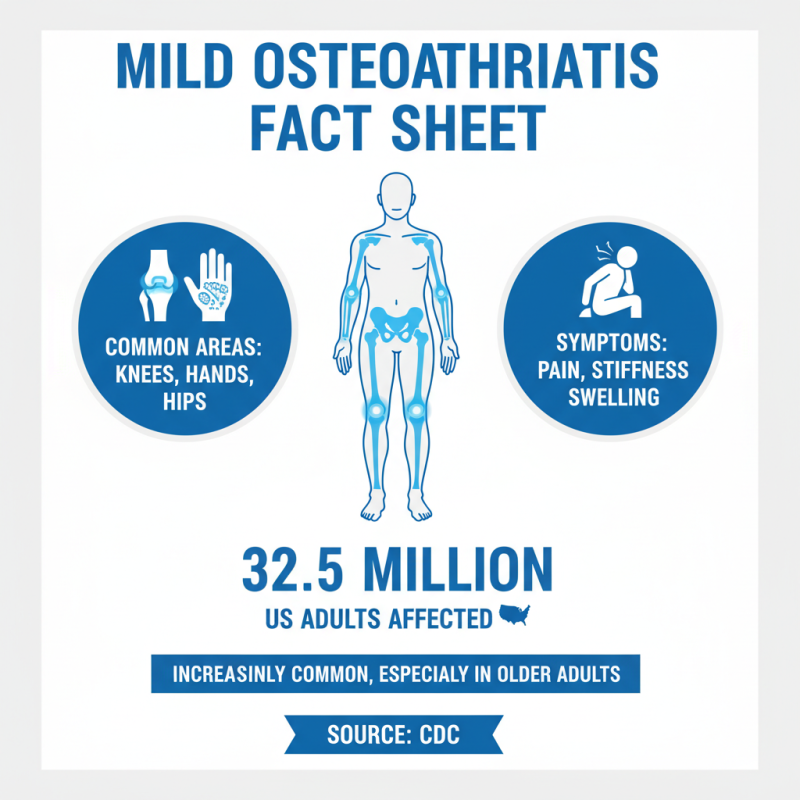
Mild osteoarthritis (OA) is becoming increasingly common, especially among older adults. It is characterized by joint pain, stiffness, and swelling, particularly in the knees, hands, and hips. According to the Centers for Disease Control and Prevention, about 32.5 million adults in the United States have osteoarthritis, contributing to significant healthcare costs and decreased quality of life.

Understanding symptoms is crucial for detection and management. Patients often report pain during movement or after activity, along with noticeable stiffness in the morning. These symptoms can fluctuate and may improve with rest. Interestingly, many individuals might overlook these early signs, attributing them to normal aging. This could delay proper care and exacerbate the condition.

Tips: Consider keeping a symptom diary. Tracking pain levels and activities can reveal patterns. Also, implementing low-impact exercises, like swimming or cycling, may alleviate discomfort.

Managing mild OA requires a proactive approach. Staying informed about the latest trends can enhance outcomes. Physical therapy and lifestyle changes greatly help in managing symptoms. However, these methods require commitment, which can be challenging. Striking a balance between rest and activity is essential. Remember, early intervention can prevent further deterioration and maintain mobility.


Emerging Treatment Strategies for Mild Osteoarthritis Management

Mild osteoarthritis (OA) affects millions worldwide. Innovative treatment strategies are emerging. New studies indicate that lifestyle modifications play a critical role. Regular physical activity, for example, can reduce symptoms significantly. Data show that patients who engage in low-impact exercises report a 30% improvement in joint function.

Dietary changes also hold promise. Incorporating omega-3 fatty acids and antioxidants into meals can alleviate inflammation. Research suggests that these foods can reduce stiffness. However, adherence to dietary guidelines remains a challenge for many. People often struggle to maintain healthy eating habits over time.

Furthermore, digital health applications are gaining traction. These tools help patients manage their condition effectively. Monitoring symptoms and tracking treatments via apps can lead to better outcomes. Yet not everyone uses these technologies. Accessibility and digital literacy are key barriers. Careful thought is needed to ensure that these strategies reach all patients.

Role of Lifestyle Interventions in Mild Osteoarthritis Care

Mild osteoarthritis (OA) affects millions, but lifestyle interventions can make a significant difference in management. A recent report showed that low-impact exercises can reduce pain by up to 30%. Exercise boosts joint flexibility and strengthens muscles around the affected areas.

Diet also plays a crucial role in managing OA symptoms. Consuming anti-inflammatory foods can be beneficial. Studies suggest a Mediterranean-style diet, rich in fruits, vegetables, whole grains, and healthy fats, may alleviate discomfort. It's not just about cutting out harmful foods; adding nutritious options is vital.

Tips: Focus on daily movement. Simple activities like walking or swimming are great options. Aim for at least 150 minutes of moderate exercise each week. Don't ignore hydration. Drinking enough water supports joint health.

Mindfulness practices can be helpful too. Research indicates that stress management may lower perceived pain levels. Simple techniques like deep breathing or yoga contribute positively to overall well-being. Reflect on daily habits; even small changes can promote a healthier lifestyle. It’s essential to find a balance between activity and rest, listen to your body.

Impact of Technology on Mild Osteoarthritis Management: Apps and Devices

Technology is reshaping mild osteoarthritis management in exciting ways. Mobile apps are crucial for tracking symptoms. Users can log their pain levels, activities, and medications. This data helps both patients and doctors understand the condition better. Devices like wearables provide real-time insights into joint movement. They can measure how much someone is limping or favoring a limb.

Another aspect is the challenge of information overload. Many apps are user-friendly. However, some users still struggle to navigate them. It can be confusing to filter through abundant data. Not all apps provide the same level of detail. Users may end up using a tool that does not fully meet their needs. It is essential to choose wisely.

Furthermore, while technology offers many benefits, it is not a one-size-fits-all solution. Some patients prefer traditional methods over digital ones. They may find it overwhelming. It raises questions about accessibility as well. Not everyone has access to these technologies. For those who do, the benefits can be substantial but require effort to maximize their potential. Each user's journey is unique.

2026 Trends in Mild Osteoarthritis Management: The Impact of Technology

This chart illustrates the increasing adoption of technology in the management of mild osteoarthritis from 2023 to 2026. The data shows a steady rise in the use of mobile apps and wearable devices among patients, highlighting the trend towards digital health solutions.

Future Research Directions in Mild Osteoarthritis Treatment Approaches

In recent years, the management of mild osteoarthritis has seen evolving trends. Research indicates that personalized treatment approaches are gaining traction. A study by the Arthritis Foundation revealed that 70% of patients responded better to tailored exercise regimens than generic plans. Engagement in low-impact activities, like swimming or cycling, can mitigate pain effectively.

Future research is focusing on innovative treatments. A report from the National Institute of Health suggests exploring new drug combinations and alternative therapies, such as acupuncture. These methods are showing promise, yet more studies are needed to validate their effectiveness. It's essential to note that not all patients will respond uniformly, prompting the need for more varied clinical trials.

The role of lifestyle modifications remains crucial. Diet and weight management are often overlooked in traditional therapy. A significant number of patients still ignore the link between obesity and joint health. Evidence shows losing 5% of body weight can drastically reduce pain levels. Aligning treatments with personal health goals will demand continuous reflection and adaptation as new insights arise in the field.

2026 Top Insights on Mild Osteoarthritis Management Trends

Management Approach Current Trend Future Research Direction Effectiveness
Physical Therapy Increased focus on tailored programs Integration of technology for personalized therapy High
Dietary Interventions Growing interest in anti-inflammatory diets Longitudinal studies on diet impact Moderate
Medication Shift towards less invasive analgesics Clinical trials on new compounds Varies
Exercise Programs Increase in community-based initiatives Research on optimal exercise types High
Psychological Support Emphasis on mental health in treatment Evaluating counseling effectiveness High

DISCOVER THE POTENTIAL OF INNOVATIVE PROSTHETICS

From minor to severe injuries, our team develops advanced devices designed to support recovery and promote overall wellness.

Contact Us