
2026 Best Vape Batteries for Global Buyers?
Choosing the right Vape Batteries in 2026 requires more than comparing capacity numbers. Global buyers face different device designs, shipping rules, recycling systems, and certification expectations. A battery that performs well in one market may create safety or compliance concerns elsewhere.
Recent reports show continued growth in the broader e-cigarette market. Grand View Research has projected strong expansion through 2030, while IMARC Group has identified rising demand for rechargeable devices and improved battery systems. These findings matter because battery quality directly affects device reliability, operating consistency, and consumer confidence. However, market reports often group batteries with complete vaping devices. That makes their figures useful, but not perfectly precise.
Small details matter. A reputable supplier should provide traceable manufacturing information, accurate capacity ratings, test documentation, and clear compatibility guidance. Look for recognized safety testing, responsible packaging, and recycling instructions. Regional requirements may differ across Europe, North America, Asia, and other markets. Buyers should verify current local rules before importing or distributing products.
Isidor Buchmann, founder of Battery University and a respected battery-safety authority, has written, “The battery is a silent partner that needs care and attention.” That warning remains relevant for Vape Batteries. Branding alone proves little. Even strong products require careful storage, handling, charging, and end-of-life planning. This guide compares leading options for global buyers, while acknowledging an uncomfortable point: published specifications can be incomplete, inconsistent, or outdated. A reliable purchase decision needs evidence, not impressive packaging.
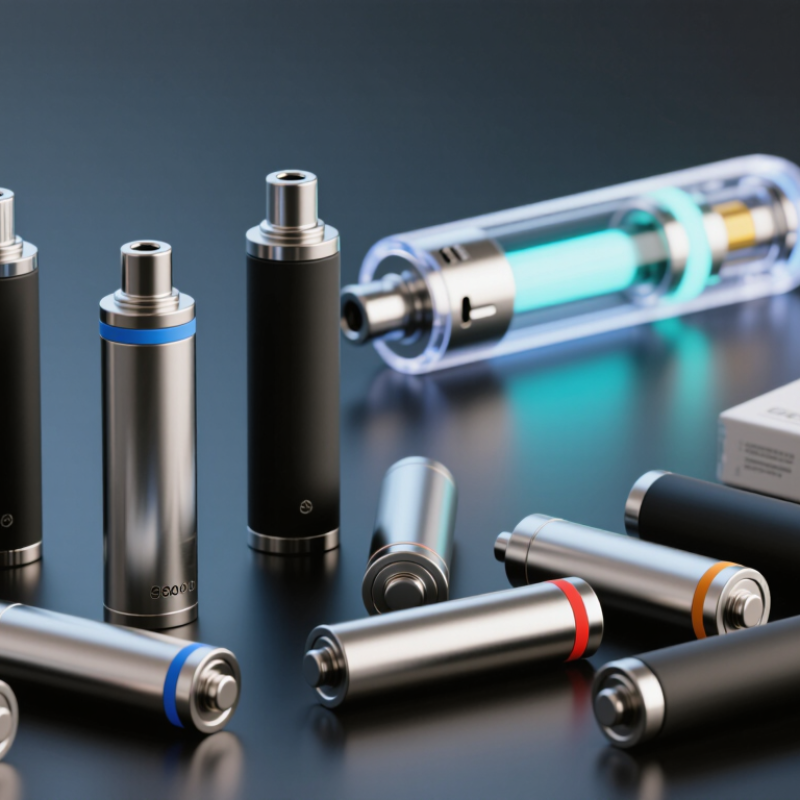
Vape Battery Types and Key Specifications for Global Buyers
Global buyers need more than a large capacity number when choosing vape batteries.
Battery type affects safety, compatibility, and daily handling. Built-in lithium-ion batteries are convenient and usually paired with a dedicated charging circuit. Removable cylindrical cells offer easier replacement, but they require careful matching, storage, and inspection. Do not mix cells with different ages or charge levels.
Key specifications deserve close attention.
Check nominal voltage, full-charge voltage, capacity in milliamp-hours, and continuous discharge current. Dimensions and connector type must also match the device.
A high mAh rating does not automatically mean better performance.
It may indicate lower output capability. That detail is often missed. For removable cells, buyers should request clear technical data, batch information, and recognized safety testing where available. A neat specification sheet can still hide weak quality control.
Global purchasing adds another layer.
Confirm the destination country’s age rules, product restrictions, labeling requirements, and transport conditions before ordering. Battery shipments may require protective packaging and documentation. Use the charger specified for the device, and avoid damaged wraps, swollen cells, heat exposure, or loose batteries in pockets. Recycling options differ by region, so end-of-life handling should be planned early. I would not rely on marketplace reviews alone; independent test evidence and a responsive supplier are more dependable. Even careful buyers can overlook regional charger standards.
How to Compare Capacity, Discharge Rate, and Battery Performance
2026 Best Vape Batteries for Global Buyers?
For global buyers, battery performance starts with capacity, not marketing numbers. A 3,000 mAh cell stores more charge than a 2,000 mAh cell, but capacity alone does not show safe output. Under IEC 61960-3 testing principles, capacity depends on temperature, discharge current, and cutoff voltage. Real-world results can therefore differ. I treat printed capacity as a claim, not a fact. That caution matters.
Discharge rate shows how quickly a cell can deliver current. A 3,000 mAh battery rated at 15 A equals roughly 5C. Higher output may support stronger performance, but it can also create more heat. UL 1642 and IEC 62133-2 emphasize protection from overheating, short circuits, and abnormal charging. Buyers should compare the continuous discharge rating, not only a brief pulse rating. Check the device’s required current first. A battery should not operate at its limit during every cycle.
Performance also changes with age. Battery University’s lithium-ion testing data shows that heat and deep cycling accelerate capacity loss. In practice, a warm battery, loose wrap, or damaged terminal deserves immediate replacement. Avoid mixed cells, unverified specifications, and chargers without suitable control. Local transport and recycling rules also differ, so confirm them before purchasing internationally. The comparison is imperfect, but safer than trusting a single headline number.
Safety Standards, Charging Practices, and Quality Verification
2026 Best Vape Batteries for Global Buyers?
Safety Standards, Charging Practices, and Quality Verification
Choosing a vape battery should begin with safety, not maximum power. Lithium-ion cells need clear specifications, stable construction, and suitable protection. Look for documented testing under recognized standards, such as IEC 62133-2 or UN 38.3, where applicable. Requirements differ between countries, so verify local rules before buying. A printed compliance mark is not enough. Request a datasheet, production details, and traceable batch information.
Use a charger designed for the battery type and voltage. Check the cable, connector, and charging surface before every session. Charge on a hard, nonflammable surface away from bedding, paper, and direct heat.
Do not use a swollen, leaking, dented, or unusually hot battery. Never carry loose cells with keys or coins. A protective case is simple, but often ignored.
Avoid charging while sleeping or leaving a battery unattended.
My practical checks are not perfect. I once focused too much on capacity and overlooked unclear labeling. That mistake changed my buying process.
I now compare stated capacity with independent test data, inspect the wrapper, and question unusually cheap offers. Capacity claims can be optimistic.
Genuine quality is easier to trust when the seller provides consistent specifications, safety guidance, and responsive support. Keep the battery dry, avoid extreme temperatures, and replace it when performance changes sharply.
Regional Regulations, Compatibility, and Shipping Considerations
Choosing the best vape battery in 2026 depends on regional rules, device compatibility, and shipping limits. A battery that works well in one market may be restricted elsewhere. Check local product, age, labeling, and import requirements before ordering. Regulations can change quickly, so official customs and transport websites remain more reliable than seller claims.
Compatibility should be checked carefully. Match the battery type, voltage range, connection, and charging method with the device manual. Do not rely only on size or appearance. A loose cell, damaged wrap, or unsuitable charger can create serious heat risks. Protected terminals and secure packaging matter during delivery. For air travel, spare lithium batteries generally require protective packaging and cabin transport, but airline rules may differ.
Shipping is often the least predictable part. Many couriers limit standalone lithium batteries, and some regions require documented testing or specific package labels. Ask the seller whether the cells meet applicable transport standards, such as UN 38.3 requirements. Confirm delivery coverage, customs responsibility, return conditions, and whether the parcel can legally enter your destination. I have found that a neat checklist still misses local enforcement details. Recheck everything before payment, especially when ordering across borders.
How to Choose the Best Vape Battery for Different Devices
Choosing the best vape battery starts with the device, not the advertised capacity. Compact pod systems usually need an integrated battery with moderate output and simple USB-C charging. Pen-style devices often suit small rechargeable cells, but the manual should confirm voltage and charging limits. Higher-power regulated devices may require removable cells with a verified continuous-discharge rating. More capacity is not always better.
Read the device manual carefully. Check battery size, chemistry, polarity, maximum current, and charger requirements. For removable cells, use matched batteries purchased together, and replace them as a set. Never use a cell with torn wrapping, dents, corrosion, or unusual heat. Keep batteries away from keys and loose metal objects. Small details matter.
A certified external charger can offer better monitoring than improvised charging methods. Still, compatibility varies by country, plug type, and transport rules, so global buyers should check local requirements before ordering. Labels can be confusing, and some ratings may be exaggerated. That deserves skepticism. In practical testing, stable performance and safe temperature matter more than impressive numbers. I would choose a slightly lower-capacity battery with clear specifications over an uncertain high-capacity option. No choice is perfect. The safest battery is the one correctly matched to the device and used according to its instructions.
2026 Best Vape Batteries for Global Buyers: How to Choose the Best Battery for Different Devices
Representative typical capacity comparison for common rechargeable lithium-ion battery formats used in vaping devices.
Larger cylindrical cells generally provide more energy and longer runtime, while integrated lithium-ion pouch batteries are commonly used in compact pod devices. Most removable lithium-ion cells have a nominal voltage of approximately 3.6–3.7 V. Actual performance depends on the device power setting, cell chemistry, discharge rating, charger quality, and battery condition. Always follow the device manufacturer’s specifications and use only compatible, undamaged batteries.
Article Source:
DISCOVER THE POTENTIAL OF INNOVATIVE PROSTHETICS
From minor to severe injuries, our team develops advanced devices designed to support recovery and promote overall wellness.
